Bedding · Crib mattress pads
Naturepedic Crib Bedding: What to Check in a Washable Mattress Pad
A crib mattress pad is a modest object with an unusually important job: it sits between the mattress and the fitted sheet, where it must stay smooth, fit properly, and tolerate the occasional wash. When comparing Naturepedic organic crib bedding or any other option, look beyond the appealing words on the label. Dimensions, construction, care instructions, and compatibility with the mattress are the details that determine whether a pad is useful in everyday life.
Published November 19, 2026
Nursery planning tends to invite large decisions. There are the crib, the mattress, the stroller, the accumulating assortment of things that seem indispensable until they have to be stored somewhere. A mattress pad is smaller, quieter, and easier to overlook. Yet it is one of the bedding layers families may handle most often: fitting it beneath a sheet, removing it for washing, and putting it back while the day’s practical demands continue around them.
The useful question is not whether a crib mattress pad sounds reassuring in a product description. It is whether its size and construction suit the specific mattress, whether the finished sleep surface remains smooth and secure, and whether its care requirements are realistic for the household. Those questions help make an informed comparison of Naturepedic organic crib bedding without treating a particular fiber, certification, or brand name as a guarantee of comfort or safety.
Start with the mattress, not the product label
A pad is made to work with a mattress, and the two need to be considered together. Before comparing materials or quilting, check the mattress’s stated dimensions and thickness. Crib mattresses are commonly made to standardized dimensions, but details can differ, and a pad designed for one size or profile may not suit another. Use the mattress manufacturer’s measurements and the pad’s own fit guidance rather than relying on the word “crib” alone.
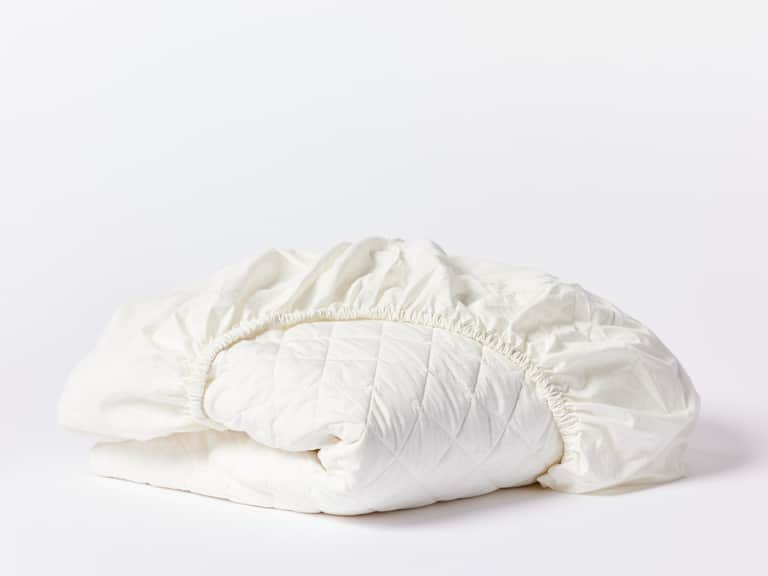
Pay attention to how the pad attaches. Some are fitted, with elastic around the edges or a skirt intended to hold the layer in place. Others are flat and are designed to sit beneath a fitted sheet. A flat construction is not interchangeable with a fitted one in every setup; the product’s instructions and the mattress maker’s guidance should settle that question. In either case, the finished arrangement should not leave loose, bunched, or folded fabric on the sleep surface.
It can help to check the dimensions in a calm moment, before the laundry is waiting and the crib needs to be made. Compare the pad’s stated measurements with the mattress and, where relevant, its height. If a product description gives only a vague fit range, seek clarification before buying. A pad that is too small may not cover the intended area; one that is too large may be difficult to keep even. Neither condition is improved by a persuasive description of the fabric.
Why a smooth, secure surface matters
A crib pad is a layer under a fitted sheet, not a topper meant to create a plush or dramatically different feel. Its practical purpose is to provide a washable barrier and, depending on its design, some modest cushioning or moisture protection. It should not change the crib into a layered landscape of folds and raised edges. Think of it as a quiet intermediary: useful when it lies flat and easy to remove when it needs cleaning.
Once the pad and sheet are in place, check that the sheet fits the mattress as intended and that the fabric remains taut and even. Avoid assuming that a fitted sheet can compensate for a pad that is not the right size. Layers can interact: a thick or poorly fitting pad may affect how the sheet sits, while a pad that shifts may wrinkle underneath it. Recheck the arrangement after washing, since laundering can alter the feel or dimensions of some fabrics.
Infant sleep recommendations are specific and should come from current guidance by qualified public-health authorities and the child’s health-care provider. A mattress pad does not replace those recommendations. Nor should a description that uses words such as “natural,” “breathable,” or “protective” be read as a substitute for checking whether the complete sleep setup is appropriate. For questions about a baby’s sleep environment, consult reliable, current guidance rather than drawing conclusions from marketing language.
Read the materials description closely
“Organic cotton” describes a material claim, but the details still matter. Look for a clear account of the pad’s components: the fabric on top, any filling or padding, the backing, and the method used to join the layers. A description that identifies only the outer fabric may leave unanswered questions about the rest of the construction. If a product is quilted, note whether the quilting is simply a pattern or whether it holds a separate fill in place.
For example, the site’s bedding information describes a Naturepedic flat crib mattress pad with organic cotton flannel on top, organic cotton muslin underneath, and a thin waterproof layer between them. It also gives dimensions of 28 by 52 inches and describes the pad as intended to be layered under a crib sheet. Those are useful points of comparison, not a reason to assume every Naturepedic pad—or every crib mattress—has the same dimensions or construction. Product specifications can vary by model and may change, so confirm the current listing and the mattress instructions before making a decision.
Materials can suggest certain practical qualities, but they do not tell the whole story. Cotton may feel soft to the hand, while a waterproof membrane may provide a barrier against liquid; the complete product’s performance depends on its construction and care. “Breathable” is often used broadly, so look for a specific explanation of what it means in that product’s context. Likewise, a pad described as organic is not automatically waterproof, unusually absorbent, or suited to every mattress profile.
Understand what certifications do—and do not—say
Certifications can help readers make sense of claims about materials and manufacturing, but the name of a certification is only the beginning of the inquiry. Check which part of the product it applies to, what the certification covers, and whether the claim is current. If a listing says that a product is certified, look for a clear explanation or documentation rather than assuming that the term applies to every component in exactly the same way.
Naturepedic crib bedding may be compared with other organic bedding by looking at the stated fiber content, relevant certifications, and the product’s detailed construction. That comparison is more useful than treating a label as a complete assessment of the finished item. Certification can provide information about specified criteria; it cannot tell you whether the pad fits your mattress, stays smooth beneath your sheet, or is convenient to wash in your own routine.
The same care applies to claims about chemical finishes or waterproof barriers. Read the exact language and identify whether it refers to the fabric, a component, or the whole product. Where the description is unclear, ask the manufacturer or retailer. A measured question—“What materials are used in each layer, and what size mattress is this designed to fit?”—often reveals more than a string of reassuring adjectives.
Make the care instructions part of the comparison
A washable crib mattress pad is only as practical as its washing and drying instructions. Before choosing one, find the recommended water temperature, cycle, detergent guidance, and drying method. A pad that needs delicate handling may be perfectly suitable for some families; another household may prefer an item that can be washed with less fuss. The important thing is to know what the routine involves before the first spill or laundry day makes the decision for you.
Some product instructions recommend a cold, gentle machine wash and low-heat tumble drying. Others may specify different settings or advise against particular detergents, bleach, fabric softeners, or high heat. Follow the care label for the exact item rather than borrowing instructions from another pad made of similar-looking materials. Waterproof layers and natural fibers can have different limits, and aggressive heat or unsuitable cleaning products may affect how a pad fits or performs.
It is also worth asking how the pad should be dried completely and how long that typically takes. A pad that remains damp is not ready to return to the bed. Having a spare sheet or a second washable layer, if appropriate for the household and the safe-sleep setup, may make laundry less pressing; it is not necessary to buy a large collection in advance. A simple rotation can be more useful than a drawer full of bedding whose care instructions are easy to forget.
A practical comparison checklist
When comparing a crib pad with other organic crib bedding options, take a minute to collect the facts in one place. The checklist below is deliberately ordinary. That is its advantage: it directs attention to things that can be verified, rather than impressions that are hard to compare.
- Mattress dimensions: Does the pad’s stated size correspond to the mattress’s measurements?
- Mattress depth: Does the attachment or fit design accommodate the mattress profile?
- Construction: Is the pad flat or fitted, and what materials make up each layer?
- Surface: Can the pad and sheet lie smoothly without bunching or excess fabric?
- Protection: Is the pad absorbent, waterproof, or simply a washable layer? Is that distinction clearly stated?
- Care: What washing temperature, cycle, detergent, and drying method are recommended?
- Certifications: Which components or claims do the stated certifications cover?
- Compatibility: Does the mattress maker permit the use of the additional layer?
- Current information: Do the product listing and care label agree, and has the manufacturer confirmed any uncertainty?
Keep the nursery setup simple
There is a temptation to make a nursery feel complete by adding layers: a mattress, a pad, a sheet, perhaps another soft accessory because it looks as though something is missing. In practice, the simpler setup is often easier to understand and maintain. Each additional item brings its own fit question, laundry instruction, and opportunity to obscure what is actually on the mattress. Buy bedding to meet a defined need, not to satisfy the vague feeling that a crib ought to be more elaborately dressed.
A well-chosen washable pad should fit the intended mattress, stay put as designed, and be manageable to clean. It does not need to promise a perfect night or transform the mattress. If a product’s strongest claims are difficult to verify, return to the basic questions: What is it made of? How is it attached? What size is it? How do I wash it? These questions are not cynical. They are a way of giving a practical household object the fair examination it deserves.
Families considering Naturepedic organic crib bedding can use the same method as they would for any brand. Compare the specific model’s dimensions and construction, inspect its care instructions, and confirm that it is appropriate for the particular mattress. A brand name can help you find a product; it cannot replace the task of checking the product itself.
Questions worth asking before purchase
If a listing leaves out a detail that affects fit or care, contact the retailer or manufacturer. Ask whether the stated dimensions refer to the pad before or after washing, whether the pad is intended to be used under a fitted sheet, and whether the waterproof layer—if there is one—requires any special care. If the mattress has an unusual profile or is not a standard size, provide its exact measurements rather than asking only whether the pad “should fit.”
For families comparing several options, it can be useful to record answers instead of relying on memory. Product names are easily confused, and a small difference in construction may matter more than a broad similarity in branding. Keep the relevant care information with the bedding or save the manufacturer’s instructions where they can be found when needed. If the care label differs from an online description, seek clarification and follow the guidance supplied with the actual item.
The bottom line
A crib mattress pad is a straightforward purchase when judged by straightforward measures. Verify its dimensions against the mattress, understand whether it is flat or fitted, examine the materials and any certifications in context, and read the wash and drying instructions before deciding. Then check that the complete bedding arrangement sits smoothly and follows current safe-sleep guidance.
Those steps make it easier to assess Naturepedic organic crib bedding without letting a label do all the thinking. They also make it easier to compare brands on the same terms. The best choice is not necessarily the one with the longest list of features; it is the one whose fit, fabric, and maintenance requirements suit the mattress and the household, with claims clear enough to verify and care simple enough to follow.